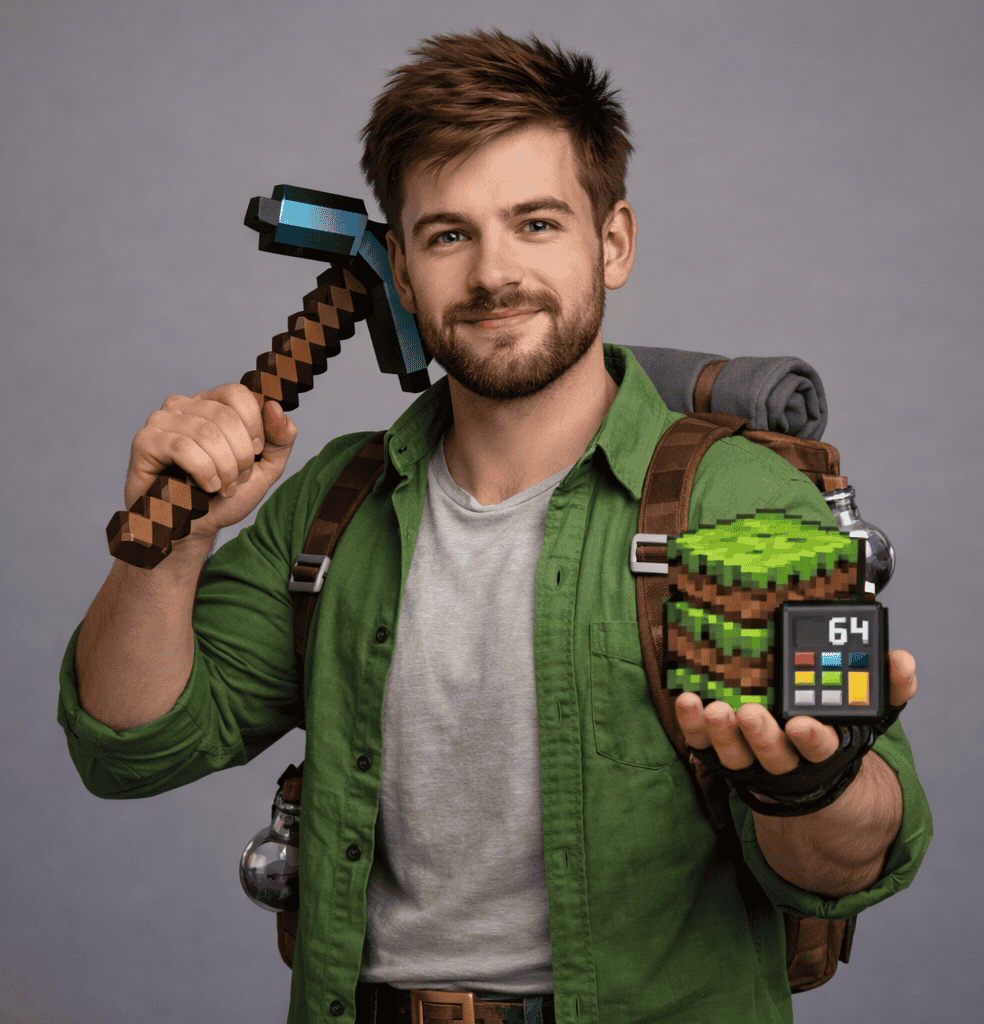
Item stacking is one of the most basic systems in Minecraft, but many players do not stop to think about it. In simple words, stacking means putting the same type of items together in one inventory slot. Instead of filling your inventory with single blocks, Minecraft allows you to collect many of the same items and keep them in one place. This makes the game easier to play, especially when you are mining, building, or exploring far from your base. Without stacking, managing items would feel slow, confusing, and frustrating for players of all ages.
When you pick up blocks like dirt, stone, or wood, they automatically join together until they reach a certain limit. That limit is called the stack size. For most items in Minecraft, this limit is 64. This system helps keep the inventory clean and organized while still adding some challenge. Players must think about what to carry and what to leave behind. Item stacking is not just about storage; it affects how players plan their adventures, manage resources, and survive longer in the game world.
Why Number 64 Matters
The number 64 may look random at first, but it actually fits very well into Minecraft’s design. One big reason is that 64 is a power of two. In computer systems, numbers like 8, 16, 32, and 64 are very easy to work with. They help games run smoother and reduce errors. Minecraft was built with simple systems in mind, especially in its early days, and choosing 64 made the game easier to manage from a technical side.
From a gameplay view, 64 is also a balanced number. It is large enough that players can collect many items without stopping too often, but not so large that inventory management becomes meaningless. If stacks were too big, players could carry everything and never make choices. If stacks were too small, the game would feel annoying. The number 64 sits nicely in the middle, giving players freedom while still keeping survival and resource planning important throughout the game.
Early Minecraft Design Choices
When Minecraft was first created, it was a very simple game made by a small team. The focus was not on fancy graphics but on gameplay and creativity. Early design choices were made to keep things easy to understand and fun for players. The stack size of 64 was one of those early decisions that stayed because it worked well. Once players got used to it, changing it would have caused confusion and broken many systems.
In the early versions, Minecraft borrowed ideas from older sandbox and building games. Many of those games also used similar stack limits. The developers noticed that players liked having limits because it added strategy. You had to decide what blocks were important and how much space you needed. Over time, as Minecraft grew, the stack size became part of the game’s identity. Even today, changing it would affect crafting, storage systems, redstone machines, and player habits built over many years.
Technical Limits Behind 64
Behind the scenes, Minecraft uses data values to store information about items. The number 64 fits perfectly into this system. Early versions of the game stored item counts in ways that worked best with powers of two. This helped keep the game stable and reduced bugs. Using 64 made it easier to track items without using extra memory or complex calculations, which was very important when the game was still small and growing.
Another technical reason is performance. Minecraft worlds can contain millions of blocks and items. If stack sizes were much larger, the game would need to handle bigger numbers more often. This could slow things down, especially on weaker computers. By keeping stacks at 64, the game stays efficient and smooth. This limit helps Minecraft run well on many devices, from old PCs to modern consoles, without hurting performance or causing unnecessary problems.
How Stacks Affect Gameplay
Stack size plays a big role in how Minecraft feels to play. Because stacks are limited to 64, players must plan their trips carefully. When mining, you cannot carry endless resources, so you must choose when to return home. This adds tension and excitement, especially in survival mode. It also makes storage systems important. Players build chests, barrels, and sorting rooms to manage their items better.
Stacks also affect building and crafting. Knowing that blocks come in stacks of 64 helps players estimate how much material they need. For example, four stacks of blocks clearly mean 256 blocks. This makes planning large builds easier without doing complex math. Overall, the stack limit adds structure to the game. It creates balance between freedom and challenge, which is one of the main reasons Minecraft remains fun and engaging even after many years.
Why Not 100 or 99?
Many players wonder why Minecraft did not choose a clean number like 100 or 99 for item stacks. On the surface, those numbers feel simple and easy to understand. But in gameplay, bigger numbers are not always better. If stacks were 100, players could carry much more without thinking. This would remove an important part of survival gameplay, where decisions matter. Limits force players to plan trips, manage space, and build storage systems.
Another reason is consistency. Minecraft uses numbers that work well with its internal systems. Numbers like 64 fit better into how the game handles data. Choosing 99 or 100 would not bring any real benefit to the game, but it could cause balance issues. Players would spend less time organizing and more time carrying everything. The developers prefer limits that support strategy, not convenience alone. That is why 64 feels like a smart and intentional choice instead of a random number.
Items That Don’t Stack to 64
Not every item in Minecraft stacks to 64, and this is done on purpose. Items like tools, weapons, armor, and some special items either stack to smaller numbers or do not stack at all. This is because these items often have durability, enchantments, or unique properties. If they stacked like blocks, managing damage and effects would become confusing and unfair.
Some items stack to 16, such as ender pearls and snowballs. These limits help balance gameplay. For example, ender pearls allow fast travel, so limiting their stack size prevents players from abusing them. Non-stackable items also add realism and challenge. You must think carefully about what gear to carry and what to leave behind. These different stack rules add variety and depth to the inventory system instead of making everything feel the same.
Inventory Balance and Survival
Inventory balance is a big part of survival mode, and stack size plays a key role in it. Because stacks are limited, players cannot grab everything they see. This makes survival more exciting and risky. When your inventory fills up deep underground, you must decide what to keep and what to throw away. These small choices make the game feel more real and rewarding.
Stack limits also encourage base building. Players create storage rooms, item sorters, and warehouses to manage their resources. Without limits, these systems would not matter much. The 64-stack rule pushes players to think long-term instead of just collecting endlessly. It keeps survival mode challenging without being unfair. This balance between limitation and freedom is one of the reasons Minecraft still feels fun even after many hours of play.
How Players Use Stack Limits
Over time, players have learned how to work smartly with stack limits. Experienced players plan their mining trips by bringing only essential tools and food. They also calculate how many stacks they need for builds. Knowing that one stack equals 64 blocks helps players estimate materials easily and avoid waste.
Players also use stack limits to design efficient farms and storage systems. Automatic farms are often built to produce items in full stacks for easy collection. Storage systems are designed around stack sizes, making sorting faster and cleaner. Instead of being a problem, the 64-stack rule becomes a tool that skilled players use to their advantage. It rewards knowledge, planning, and experience, which makes gameplay feel more satisfying.
Will Stack Size Ever Change?
Many players ask if Minecraft will ever change the stack size from 64. While small changes have happened for certain items, the main stack size has stayed the same for years. This is because changing it would affect almost every part of the game. Crafting recipes, storage systems, farms, and player habits would all need updates.
The developers are very careful with core mechanics. Since the 64-stack system works well and players are comfortable with it, there is little reason to change it. Instead of increasing stack sizes, the game adds new storage options like shulker boxes to help players carry more items in a balanced way. This keeps the game fresh without breaking its foundation.
Conclusion
The reason stacks are 64 in Minecraft is not random at all. It is a mix of technical logic, game balance, and smart design choices made early in the game’s life. The number 64 works well with computer systems, keeps gameplay fair, and encourages players to plan and think. It limits inventory without making the game frustrating. Over time, this simple rule became a core part of Minecraft’s identity. Even today, it continues to support creativity, survival, and long-term fun for players around the world.
FAQs
Q1: Why is 64 used instead of 50?
Because 64 works better with game systems and keeps gameplay balanced.
Q2: Can stack size be changed?
Only with mods or commands. The default game uses 64.
Q3: Why do some items stack to 16?
Those items are powerful or special, so limits help balance them.
Q4: Will Mojang increase stack sizes in future updates?
It is very unlikely, as it would affect many core systems.
Q5: Are stack limits important for survival mode?
Yes, they make survival more challenging and strategic.